Historical Figures
169 sourced historical stories, arranged by subject.
 Historical Figures
Yuan drama gave varied social characters a stage voice
Guan Hanqing was a major writer of Yuan zaju drama. His works address wrongful convictions, love, and social life; The Injustice to Dou E is one of his best-known plays. Zaju tells stories through songs, dialogue, and performance. Surviving texts also passed through later printing and need to be distinguished from their original performance setting.
 Historical Figures
Guernica answered war in black, white, and gray
Pablo Picasso created Guernica for the 1937 Paris International Exposition, responding to the bombing of the town during the Spanish Civil War.
 Historical Figures
Han Fei's political thought examined institutions and power
Works associated with Han Fei discuss laws, techniques of government, and ruling authority. They attempt to explain why governing cannot depend only on a monarch's personal morality.
 Historical Figures
Hans Christian Andersen also wrote travel books and autobiography
Hans Christian Andersen is famous for fairy tales, but he also wrote novels, plays, poetry, travel accounts, and autobiography. His literary activity extended well beyond children's stories.
 Historical Figures
A female pharaoh sent ships to the land of Punt
Hatshepsut ruled Egypt as a pharaoh during the Eighteenth Dynasty and sponsored extensive construction. Her expedition to Punt brought valuable products and appeared in temple reliefs. Later attempts to erase her royal image complicate the reconstruction of her reign and its place in Egyptian history.
 Historical Figures
A medieval abbess wrote music, visions, and books about nature
Hildegard of Bingen, also known as the "Sibyl of the Rhine", was a German Benedictine abbess and polymath, active during the High Middle Ages as a writer, composer, philosopher, mystic, visionary, and as a medical writer.
 Historical Figures
Hu Shi's proposals called for vernacular literature
Hu Shi published A Preliminary Discussion of Literary Reform in New Youth, proposing changes to expression, language, and methods of writing. The development of vernacular writing had a broader history and many participants. The essay became an important text of the New Culture Movement, rather than the sole starting point of reform.
 Historical Figures
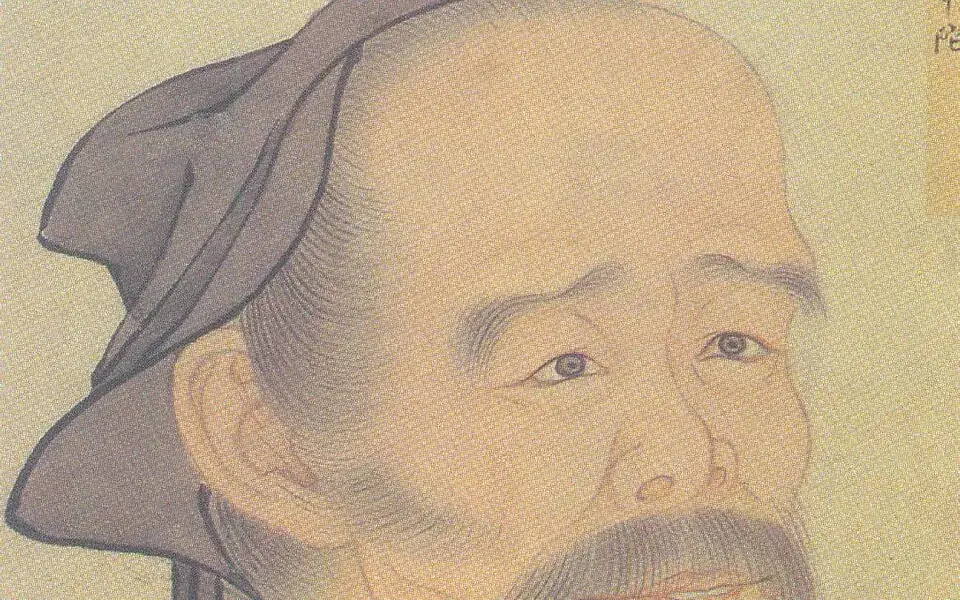
Stories about ancient physicians mix records and legend
Hua Tuo practiced medicine near the end of the Han dynasty. Surviving histories describe his treatments and mafeisan, while many additional stories developed later. Ancient accounts cannot be directly reconstructed as modern surgical procedures. Reading medical history requires attention to the sources' context and to legends added afterward.
 Historical Figures
An early thinker considered how institutions could restrain power
In Waiting for the Dawn: A Plan for the Prince, Huang Zongxi discussed rulers, ministers, schools, and institutions while reflecting on Ming political experience. His proposals need to be understood within the transition between Ming and Qing. They should not be directly equated with modern political terminology or institutional programs.
 Historical Figures
A journalist used evidence to expose the violence of lynching
Ida Bell Wells-Barnett was an American investigative journalist, sociologist, educator, and early leader in the civil rights movement. She was one of the founders of the National Association for the Advancement of Colored People. Wells dedicated her career to combating prejudice and violence, and advocating for African-American equality—especially for women.
 Historical Figures
Alternating-current systems linked generators and motors
Nikola Tesla studied technologies such as polyphase alternating current and induction motors, connecting changes in current with moving magnetic fields and contributing to the development of AC systems.
 Historical Figures
Maxwell brought light and electromagnetism into one theory
James Clerk Maxwell described electromagnetic fields mathematically. The predicted speed of their propagation was close to the speed of light, encouraging the view that light is an electromagnetic wave. Later experiments confirmed the existence of electromagnetic waves. The familiar equations bearing his name were subsequently reorganized and do not exactly reproduce the form of his original papers.