Historical Figures
169 sourced historical stories, arranged by subject.
 Historical Figures
A landscape scroll was later divided into two sections
Huang Gongwang's Dwelling in the Fuchun Mountains presents a landscape in a long handscroll. After suffering fire damage, it was divided into two parts, which now have different histories of transmission and preservation.
 Historical Figures
Early detective fiction already emphasized reasoning
Edgar Allan Poe's The Murders in the Rue Morgue introduced the analytical character Dupin. Observation and analysis explain the case, making it an important early work of detective fiction.
 Historical Figures
Australia's first woman parliamentarian fought for family welfare
Edith Cowan entered Western Australia's parliament in 1921 after years of work on social reform. Her concerns included women's opportunities, children's welfare, and legal treatment of families. The election connected her community activism with a new institutional role in shaping laws and public policy.
 Historical Figures
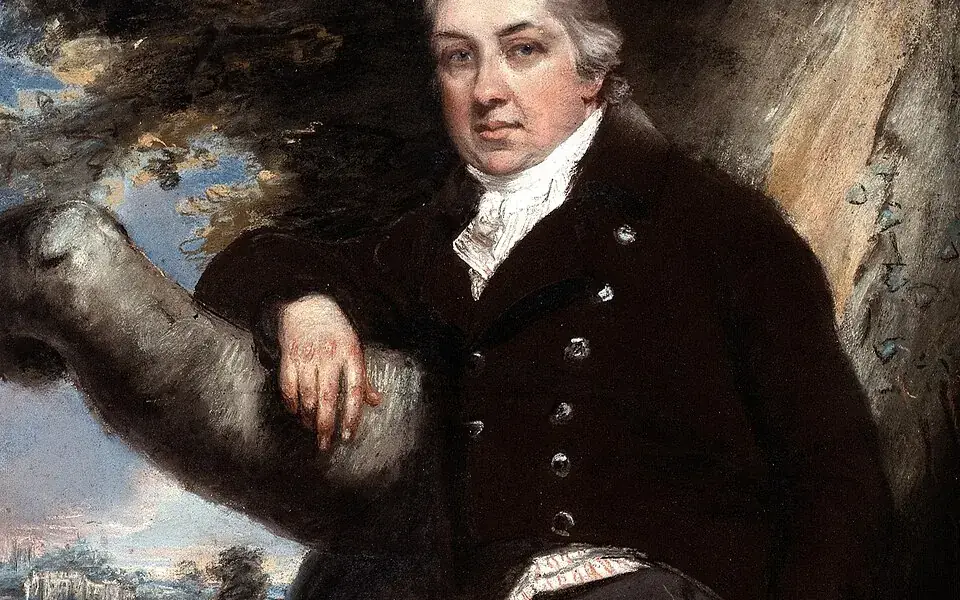
Cowpox vaccination was an important step in preventing smallpox
In the late 18th century, Edward Jenner investigated the relationship between cowpox and immunity to smallpox. His 1796 inoculation experiment became a famous event in the history of vaccines.
 Historical Figures
One duchess became queen of both France and England
Eleanor of Aquitaine (Aliénor d'Aquitaine or Éléonore d'Aquitaine; Occitan: Alienòr d'Aquitània; Helienordis, Alienorde or Alianor; c. 1124 – 1 April 1204) was Duchess of Aquitaine from 1137 to 1204, Queen of France from 1137 to 1152 as the wife of King Louis VII, and Queen of England from 1154 to 1189 as the wife of King Henry II.
 Historical Figures
Statistical charts helped make the case for nursing reform
Florence Nightingale combined medical and sanitary work with statistical evidence, using charts to explain military deaths and related problems while advocating hospital and public-health reform.
 Historical Figures
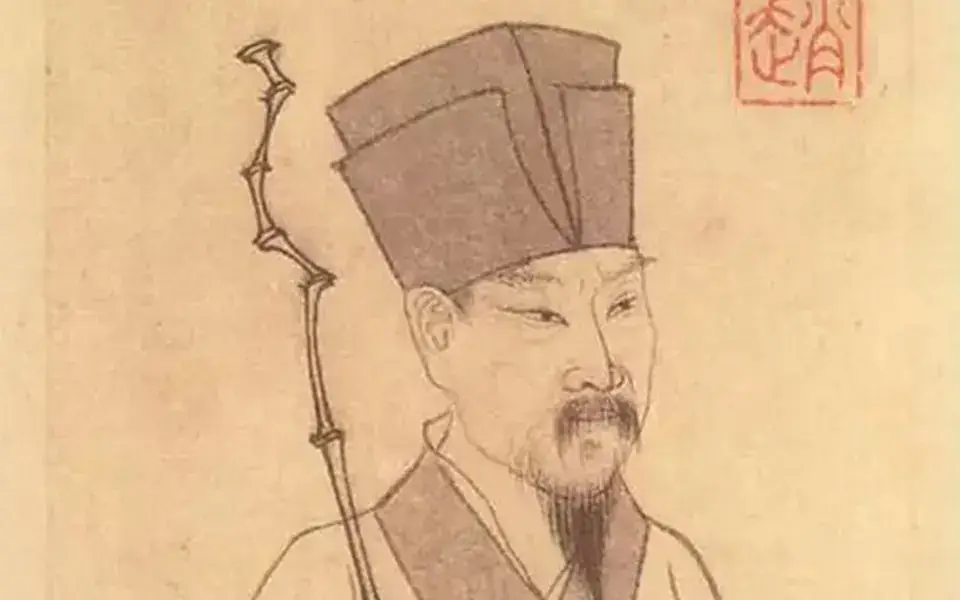
The Red Cliff rhapsodies explored travel and reflection
During his years in Huangzhou, Su Shi wrote the two Red Cliff rhapsodies. Through excursions, dialogue, and scenery, he connected his personal experiences with reflections on time and life.
 Historical Figures
Frankenstein was first published anonymously
Mary Shelley's Frankenstein appeared anonymously in 1818. The story explores the creation of life and the responsibilities that fall upon its creator.
 Historical Figures
An ancient medical text described preparing sweet wormwood
Ge Hong's Emergency Prescriptions Kept Up One's Sleeve included remedies for urgent use. Its instructions for obtaining juice from sweet wormwood later attracted the attention of modern researchers. Connecting an ancient prescription to a modern medicine requires experiments, extraction, and validation. An ancient preparation method cannot simply be equated with modern clinical treatment.
 Historical Figures
Goethe developed Faust over many years
Goethe spent many years writing and revising Faust. Its two parts explore knowledge, desire, and action, and did not emerge from a single brief period of composition.
 Historical Figures
Pea experiments revealed statistical patterns of inheritance
Mendel counted traits in the offspring of crossed pea plants and proposed laws of inheritance. His nineteenth-century findings gained wider recognition only later.
 Historical Figures
Travel and textual research could support one another
Gu Yanwu investigated geography, customs, and institutions widely, valuing both written sources and firsthand observations. His works include Record of Daily Knowledge. His scholarship emphasized concrete knowledge and practical questions. It held an important place in the development of Qing evidential scholarship and influenced later research methods.