Historical Figures
169 sourced historical stories, arranged by subject.
 Historical Figures
An outlaw's homemade armor became an Australian icon
Ned Kelly's final confrontation with police made his homemade armor an enduring image. His gang's robberies, killings, written protests, and capture produced sharply different interpretations of his life. Examining the events alongside later legend helps explain why his reputation remains historically contested.
 Historical Figures
A Texcoco ruler became remembered as a poet and builder
Nezahualcoyotl ruled Texcoco during the rise of the Aztec Triple Alliance and became associated with law, hydraulic engineering, and poetry. Colonial accounts preserved his reputation as a learned ruler, although the authorship of poems attributed to him and details of his achievements remain debated.
 Historical Figures
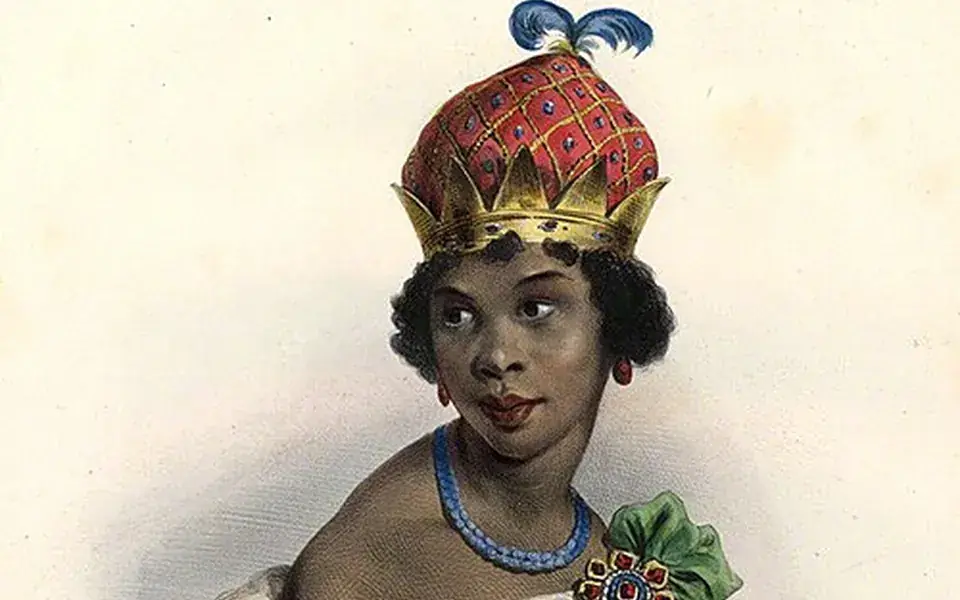
A queen used diplomacy and warfare to defend her kingdoms
Nzinga ruled Ndongo and Matamba during Portuguese expansion in southwestern Africa. She negotiated, changed alliances, and fought to sustain her authority in a region reshaped by warfare and enslavement. Her political career offers a complex example of leadership under sustained external and internal pressure.
 Historical Figures
On the Origin of Species drew on more than one island visit
In On the Origin of Species, Darwin developed his account of natural selection from years of observations, breeding records, and comparative study. It did not arise simply from a glance at finches.
 Historical Figures
A literary scholar collected inscriptions on stone
In addition to writing poetry and prose and compiling histories, Ouyang Xiu collected inscriptions and other epigraphic material in Records of Collected Antiquities. Such evidence could help correct received accounts. Collecting antiquities was more than an aesthetic pursuit; it also supported scholarly investigation.
 Historical Figures
A ruler transformed Cusco into the center of an expanding empire
Pachacuti is traditionally credited with transforming the kingdom centered on Cusco into an expanding Inca empire. Accounts of his reign combine historical claims with myth and retrospective political storytelling, making the evidence itself an important part of understanding his conquests and administrative reforms.
 Historical Figures
Brazil's long-serving emperor combined monarchy with a passion for learning
Dom Pedro II, known as "the Magnanimous", was the second and final emperor of the Empire of Brazil. He reigned from 1831 until his deposition in the military coup of 1889, presiding over the longest and most stable reign in Brazilian history.
 Historical Figures
An Athenian politician helped turn a city into a monumental capital
Pericles became the leading politician of fifth-century BC Athens, where democratic institutions coexisted with imperial power over allied communities. His age produced ambitious building projects and enduring political arguments. Ancient accounts praised his leadership while also preserving criticism, comedy, and disputes about his influence.
 Historical Figures
Newton's Principia linked motion on Earth with the heavens
Newton's Mathematical Principles of Natural Philosophy set out laws of motion and universal gravitation, using mathematics to explain connections between terrestrial objects and celestial motion.
 Historical Figures
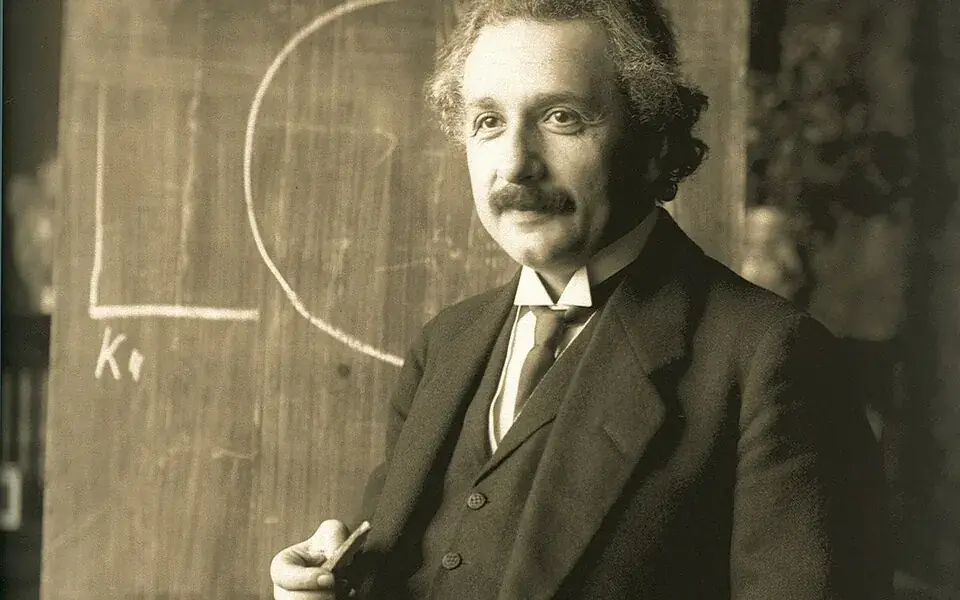
Einstein's Nobel citation emphasized the photoelectric effect
Einstein received the 1921 Nobel Prize in Physics. The official recognition emphasized, among other contributions, his explanation of the photoelectric effect, rather than directly rewarding general relativity.
 Historical Figures
Pride and Prejudice first appeared without Austen's name
When Jane Austen's Pride and Prejudice was published in 1813, it did not directly identify her by name, instead referring to her as the author of an earlier work.
 Historical Figures
Agricultural books also recorded food processing
Jia Sixie's Essential Techniques for the Welfare of the People collected agricultural experience alongside animal husbandry, brewing, and food processing. Its discussions of seasons, land, and techniques reflect agricultural knowledge in northern China. Ancient farming books addressed far more than sowing crops in fields.