Historical Events
72 sourced historical stories, arranged by subject.
 Historical Events
The Bastille symbolized the power of the old regime
On July 14, 1789, a Parisian crowd stormed the Bastille amid a political crisis and a search for weapons and gunpowder. The prison became widely remembered for its symbolic significance.
 Historical Events
The Suez Canal saved ships a journey around a continent
Opened in 1869, the Suez Canal connects the Mediterranean and Red Seas. Ships traveling between Europe and Asia no longer had to make the full voyage around southern Africa.
 Historical Events
Trade in tea and horses linked mountain routes
The Tea Horse Road commonly refers to transport and trading routes across southwestern China and neighboring regions, where tea, horses, and other goods moved through mountain networks.
 Historical Events
The Titanic disaster spurred maritime safety reform
The Titanic struck an iceberg and sank during its maiden voyage in 1912. Scrutiny of lifesaving equipment and communication arrangements helped drive the development of maritime safety rules.
 Historical Events
Forced removal turned a journey west into a catastrophe
The Trail of Tears was the forced displacement and ethnic cleansing of about 60,000 Native Americans of the "Five Civilized Tribes", including their black slaves, between 1830 and 1850 by the United States government. The relocated peoples suffered from exposure, disease, and starvation while en route to their newly designated Indian reserve.
 Historical Events
Versailles tried to settle postwar responsibility and order
The Treaty of Versailles, signed in 1919, set provisions concerning Germany's territory, armed forces, and reparations. It was also connected with the establishment of the League of Nations. Negotiating and implementing the treaty produced lasting controversy. Its consequences need to be understood alongside economics, politics, and other postwar arrangements, rather than through a single cause.
 Historical Events
Two versions of a treaty carried different meanings
The Treaty of Waitangi was signed in 1840 in English and Māori versions with important differences in meaning. Drafting, translation, and debate affected what signatories understood. These differences helped shape later disputes over authority, land, and the relationship between Māori communities and colonial government.
 Historical Events
An emperor's capture plunged the Ming into crisis
During his campaign against the Oirat, Emperor Yingzong of Ming was captured in the Tumu Crisis. The Ming then organized defenses and rearranged power at court. The consequences extended beyond a battlefield defeat to the accession of a new emperor, the defense of Beijing, and Yingzong's later return to the throne.
 Historical Events
The Declaration of Independence combined principles and accusations
The 1776 Declaration of Independence explained rights and the legitimacy of government while listing accusations against the British king, providing a political justification for colonial independence.
 Historical Events
Railways and telegraphs changed the organization of the Civil War
During the American Civil War, railways transported troops and supplies over long distances, while telegraphs accelerated orders and news. These technologies became part of modern military organization.
 Historical Events
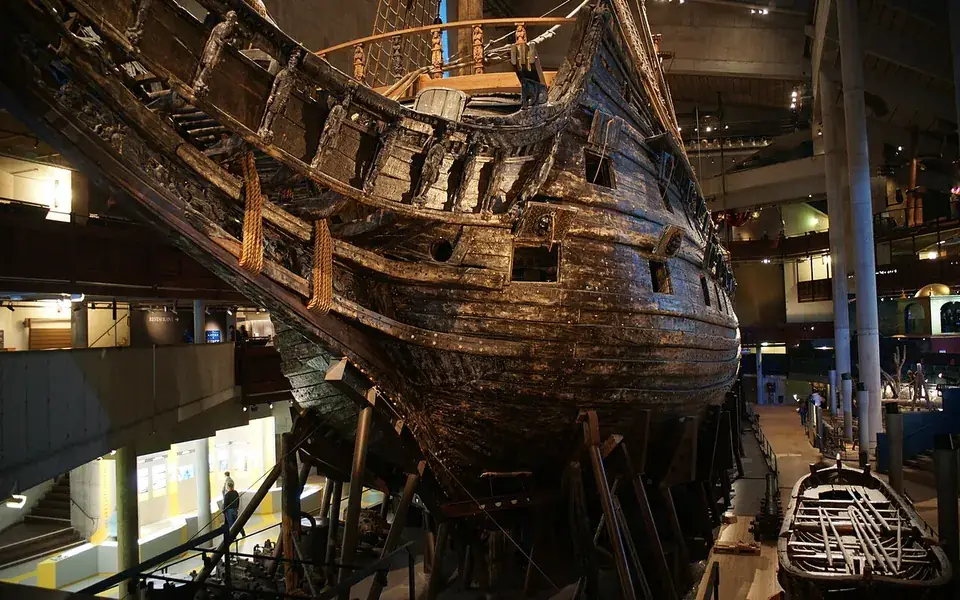
A Swedish warship sank before leaving its capital's harbor
Vasa was built to display Swedish naval power, but its tall, heavily armed hull proved dangerously unstable. The warship sank in Stockholm harbor on its maiden voyage in 1628. Its loss exposed failures of design and command, and its later recovery preserved remarkable evidence of seventeenth-century shipbuilding.
 Historical Events
A settlement in Brazil's interior resisted repeated military expeditions
The War of Canudos was a conflict between the First Brazilian Republic and the residents of Canudos in the northeastern state of Bahia, between 1896 and 1897. It was waged in the aftermath of the abolition of slavery in Brazil and the overthrow of the monarchy.