Everyday Curiosities
38 sourced historical stories, arranged by subject.
 Everyday Curiosities
London's foul-smelling river pushed Parliament toward a sewer project
The Great Stink was an event in Central London during July and August 1858 in which the hot weather exacerbated the smell of untreated human waste and industrial effluent that was present on the banks of the River Thames.
 Everyday Curiosities
The prime meridian was chosen by international agreement
The International Meridian Conference of 1884 selected the meridian through Greenwich as an important reference for calculating longitude. The line at zero degrees is a convention, rather than a naturally occurring boundary.
 Everyday Curiosities
The calendar skipped ten dates in 1582
When the Gregorian reform was introduced, some Catholic regions moved directly from October 4 to October 15, 1582, correcting the discrepancy accumulated by the calendar.
 Everyday Curiosities
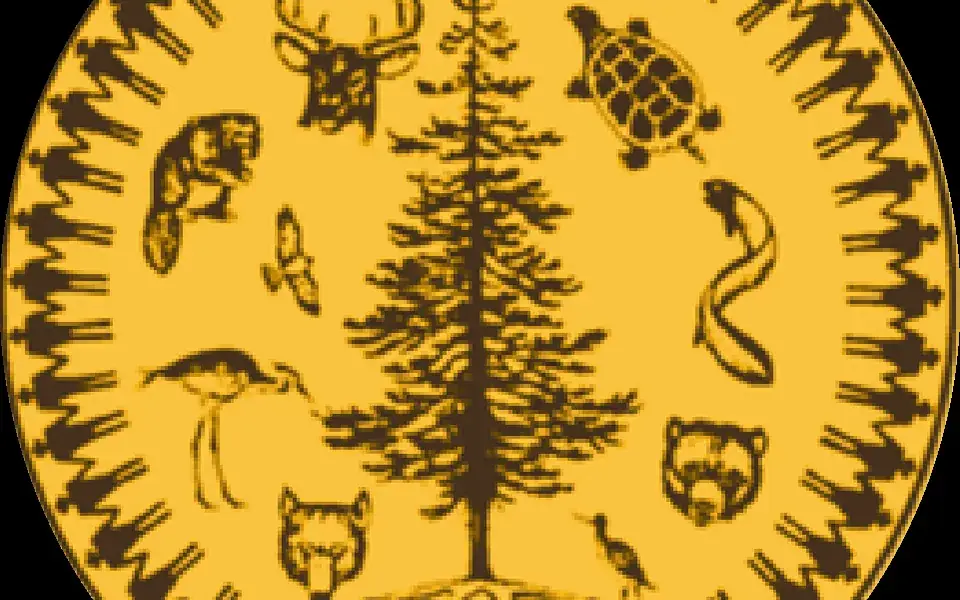
A confederacy joined nations without erasing their separate identities
The Haudenosaunee Confederacy, also known as the Iroquois, is a confederacy of Iroquoian-speaking indigenous peoples in northeast North America. They were known by the French during the colonial years as the Iroquois League, and later as the Iroquois Confederacy.
 Everyday Curiosities
The euro began as a currency for accounting
The euro entered use for accounting and electronic payments in 1999. Banknotes and coins began circulating in everyday life in 2002, making these two distinct milestones.
 Everyday Curiosities
An hourglass measures an interval, not a date
An hourglass lets sand pass from an upper chamber through a narrow opening into a lower chamber. The time taken for it to empty marks an interval, and the glass usually has to be turned over.
 Everyday Curiosities
Paper money developed partly because coins were hard to carry
Jiaozi developed in Sichuan during the Song, initially associated with certificates issued by merchants and later managed by the government. It is an important example in the history of paper currency.
 Everyday Curiosities
Caesar's calendar gave the year a regular length
The Julian calendar introduced after Julius Caesar's reform set ordinary years at 365 days and added leap days according to a rule. This improved the alignment of the earlier Roman calendar with the seasons.
 Everyday Curiosities
Mahjong suits carry numbers and written symbols
Mahjong mainly uses numbered dot, bamboo, and character tiles, together with honor tiles. Regional versions add flower tiles and special rules, creating varied ways to play and score.
 Everyday Curiosities
Maize was shaped by generations of selective breeding
Maize underwent long domestication and selective breeding in the Americas. Its mature ears differ markedly from its wild ancestors, and it later spread to many parts of the world.
 Everyday Curiosities
An imported textile pattern became associated with a Scottish town
Paisley shawls were a fashionable item of women's clothing in Europe during the late eighteenth and nineteenth centuries. Many were made of intricately woven and delicate wool, as well as examples being printed onto silks, wools, and cotton.
 Everyday Curiosities
The paper clip had more than one classic design
Paper clips use the springiness of bent metal wire to grip sheets. Many patented shapes appeared over time, and the familiar double-loop form does not represent every early design.