Ancient Civilizations
112 sourced historical stories, arranged by subject.
 Ancient Civilizations
An early town was entered through its rooftops
At Çatalhöyük, densely packed houses formed a settlement with rooftop access and rich interior decoration. Burials, wall paintings, figurines, and food remains offer clues to daily life and belief. Their interpretation requires care, especially where modern assumptions about religion and social organization outrun the evidence.
 Ancient Civilizations
Desert builders aligned enormous houses with the sky
The builders of Chaco Canyon created large masonry complexes in a demanding desert environment. Roads, repeated architectural plans, and alignments with celestial events connected the canyon's great houses to a wider Ancestral Puebloan world whose purposes still invite careful interpretation.
 Ancient Civilizations
A desert capital grew from adobe walls and royal compounds
Chan Chan, sometimes called Chimor, was the capital city of the Chimor kingdom, a pre-Columbian era culture in South America. The city is now an archeological site in the department of La Libertad five kilometers west of Trujillo, Peru.
 Ancient Civilizations
A mountain resort gathered landscapes from different regions
The Chengde Mountain Resort contains palaces, lakes, plains, and mountains. Qing emperors lived and conducted affairs there, with several temples also standing nearby.
 Ancient Civilizations
A Maya city's ball court served more than sport
Chichén Itzá preserves a large ball court, pyramids, and other buildings. The ball game was associated with ritual and power in Maya society, rather than being only a sport in the modern sense.
 Ancient Civilizations
Gardens created layers of views within limited space
Suzhou's classical gardens arrange water, rocks, buildings, and plants to direct sight lines. Window openings and winding paths allow the same space to present different scenes. Owners, craftspeople, and later rebuilding all contributed to their development. Today's landscapes often contain layers from different periods, rather than the complete original appearance of a single design.
 Ancient Civilizations
Legal provisions were carved on a great stone stele
The Code of Hammurabi was inscribed in cuneiform on a stone stele. Covering property, labor, family matters, and punishment, it is an important legal text from ancient Mesopotamia.
 Ancient Civilizations
A cathedral took centuries to complete
Construction of Cologne Cathedral began in the Middle Ages. After a long interruption, work resumed and the building was completed in the 19th century, giving it a history across several eras.
 Ancient Civilizations
The arena's underground spaces helped stage its spectacles
The underground part of Rome's Colosseum contains passages, rooms, and transport facilities that supported the entrance of animals and people. The exposed underground structures seen today were not the original spectators' view.
 Ancient Civilizations
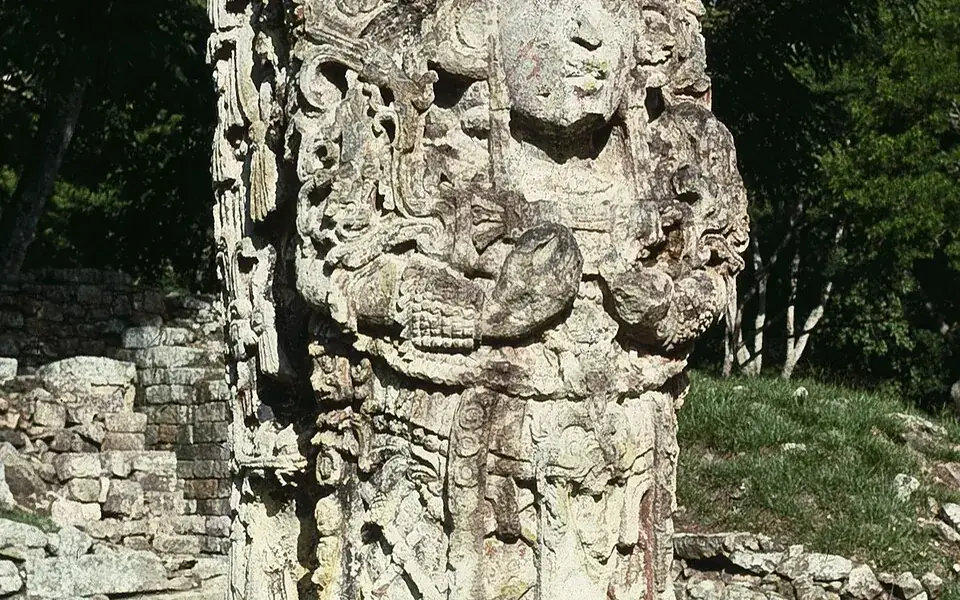
A Maya city's carved monuments preserved a dynasty's history
Copán is an archaeological site of the Maya civilization in the Copán Department of western Honduras, not far from the border with Guatemala. It is one of the most important sites of the Maya civilization, which was not excavated until the 19th century.
 Ancient Civilizations
Cuneiform's strokes came from pressing a stylus into clay
Mesopotamian scribes pressed wedge-shaped marks into clay tablets with tools such as reed styluses. The shapes of the writing gradually changed with the tools and the needs of record keeping.
 Ancient Civilizations
A clay cylinder recorded a conqueror's claim to legitimacy
The Cyrus Cylinder records a Persian conqueror's account of taking Babylon and restoring religious institutions. Its language belongs to older Mesopotamian traditions of royal legitimacy. Modern descriptions as a declaration of human rights remain contested, and scholars distinguish the inscription's ancient purpose from its later symbolism.